
SBN · Care and cleaning
Caring for travertine: cleaning and impregnation
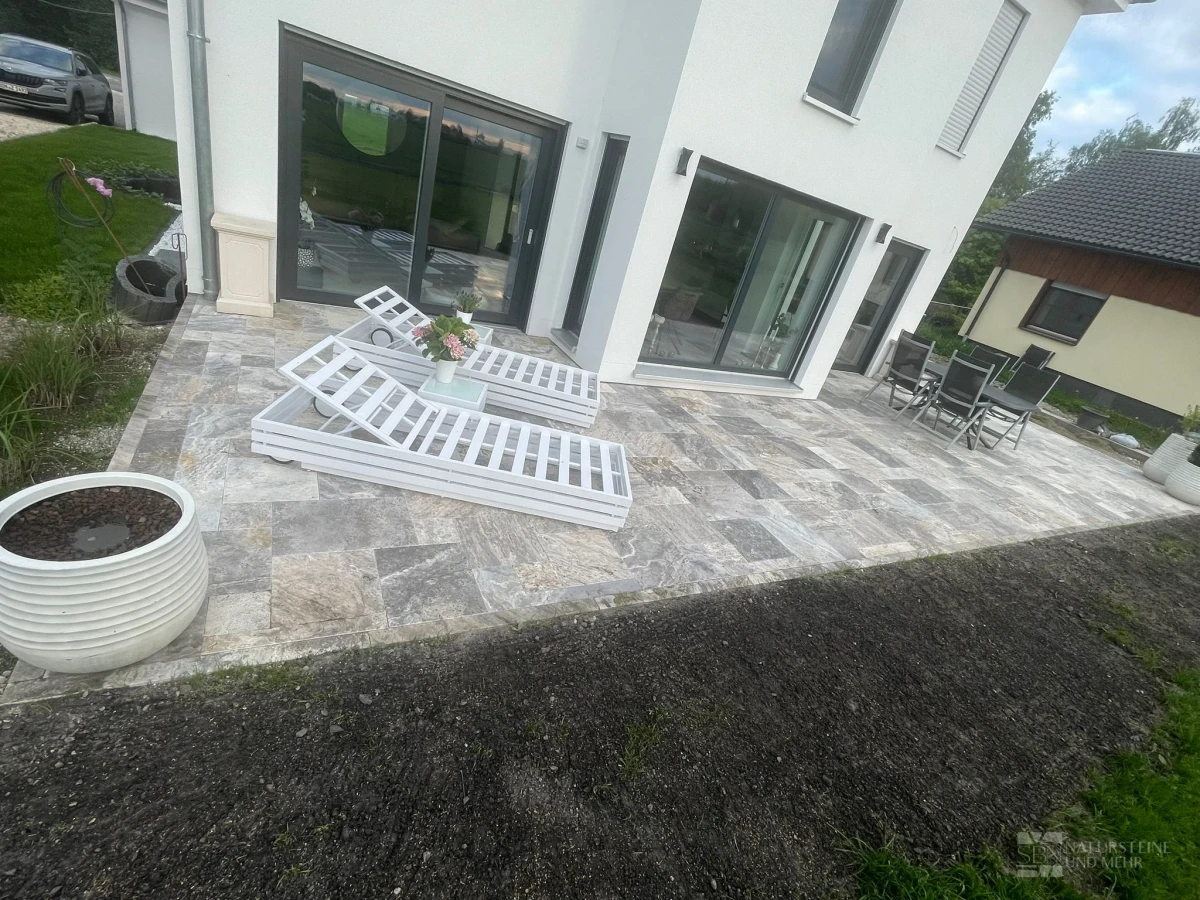
The right care routine depends on your stone’s finish and where it is used. An impregnating sealer can make cleaning easier, but it does not replace regular maintenance.
Why use an impregnating sealer?
Travertine is naturally porous. A compatible treatment reduces the penetration of dirt and liquids without making the stone stain-proof. Application and renewal depend on the product, the substrate and exposure; follow the manufacturer’s instructions.

Everyday care
Sweep away leaves, grit and dirt before they become embedded. Use lukewarm water and a pH-neutral natural-stone cleaner suitable for travertine. Avoid vinegar, citric acid and other acidic cleaners, which can attack limestone. Do not direct an aggressive pressure-washer jet at the surface, and allow the area to dry properly after cleaning.
Dealing with stains
Blot spills promptly with a clean cloth rather than spreading them. For grease or rust, choose a treatment expressly suitable for travertine and test it in an inconspicuous area. Old or deeply absorbed stains may need professional cleaning followed by renewed protection.
Winter maintenance
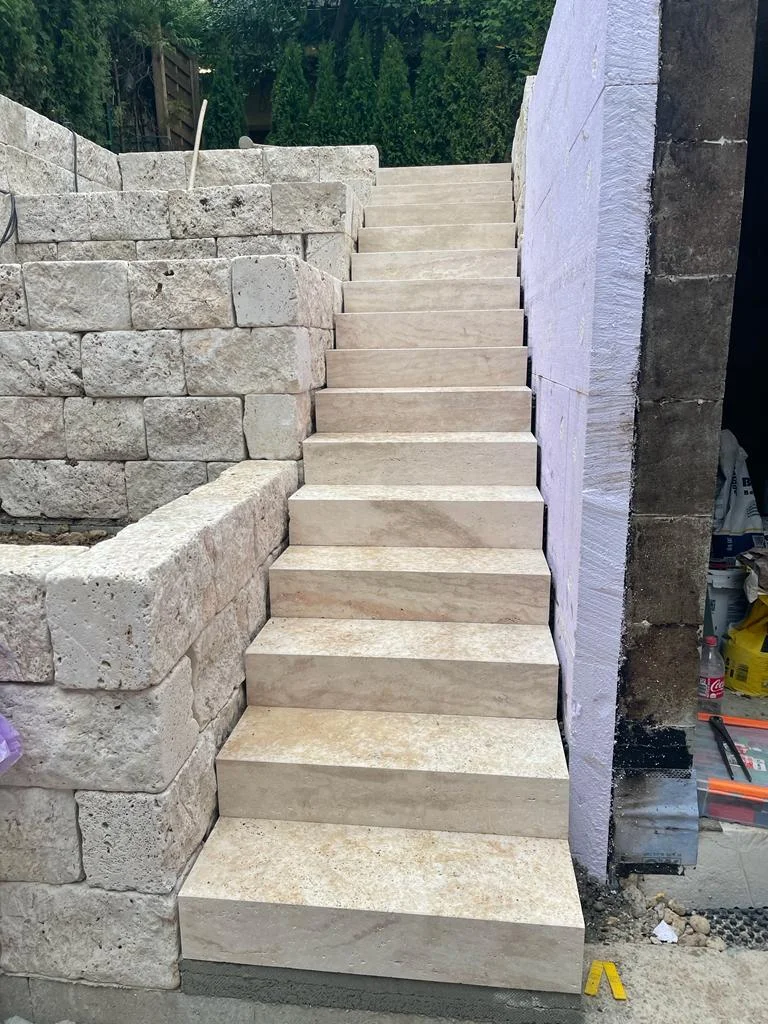
Check which de-icing products, if any, are suitable for your particular stone. Frost resistance does not automatically establish resistance to de-icing salts. SBN supplies travertine tiles, paving slabs, block steps and walling in a range of colours and finishes from Lingenfeld.
Your next step
- Identify the finish and whether the surface is indoors or outdoors.
- Test cleaning and protection products on a small hidden area.
- For a stain, record its likely cause and any treatments already used.
Tell us the dimensions and intended use. For delivery, include the country, postcode and access details.
Discuss your project with us →Products for this project

Related collections
Compare products and formats for your project.