SBN · Installation and planning
Polygonal travertine: laying and pointing in 3D

Discover Classic’s natural edges and porous surface, from a clean base to joints filled with a grout bag.
Material and preparation
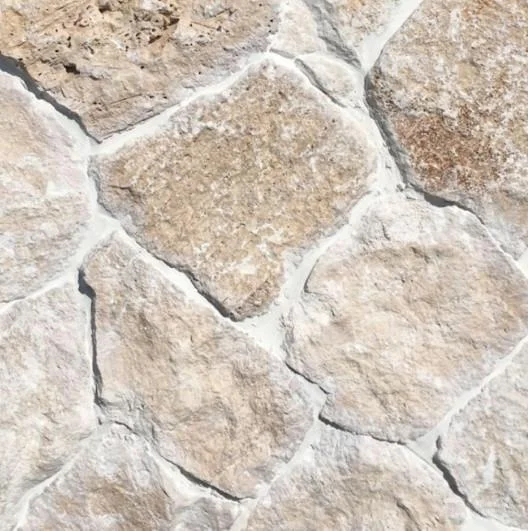
Polygonal Classic has irregular stone sizes of approximately 10–40 cm and thicknesses of about 2–4 cm. The rough natural face and sawn back serve different purposes. Check the wall’s load capacity, remove dust and loose material, and prepare defects with the selected system. Facades, insulated walls and wet areas also require appropriate junctions and drainage.
Arrange, bond and allow to set
Dry-lay a sample, mix shapes and sizes, and plan balanced joints, corners and cuts. Joint width must suit the selected grout. The illustrated combined method applies adhesive to both the base and the sawn stone back. Use a system suitable for the stone and construction, with the specified trowel, layer thickness and coverage. Press and align stones, keep joints clear and avoid dirtying porous faces. Curing depends on the product and weather; the animation shows a time jump.

Pointing and finishing
Fill joints evenly using a grout and bag suitable for natural stone, the joint dimensions and the application. Guide the nozzle along the joint without smearing the face. At the specified firmness, compact and shape the grout and brush as permitted by the system. Do not assume a universal waiting time. Test colour, texture and cleaning on a small sample, viewed in daylight and the intended lighting.
Explore the 3D animation
Rotate the wall, zoom and replay the six stages. Textures use original SBN product photos; this is a dimension-based model, not a 3D scan. Thirty seconds represent a time lapse, not site working time. The linked manufacturer examples explain techniques for their own systems and do not constitute approval of a particular mortar for every travertine installation.
Sources
www.sopro.com · www.geopietra.de · stegu.deYour next step
Tell us the dimensions and intended use. For delivery, include the country, postcode and access details.
Discuss your project with us →Products for this project